
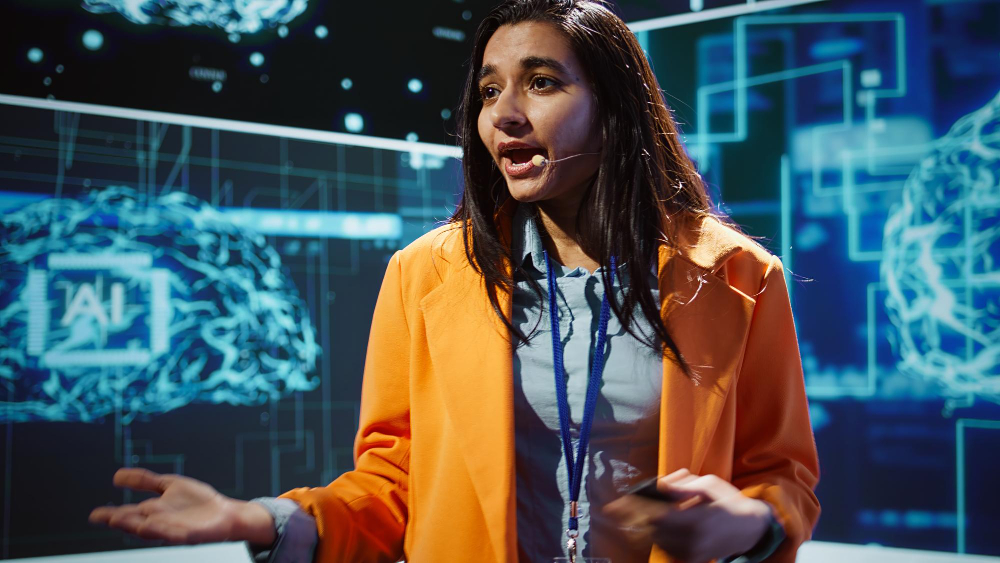
We stand at a remarkable turning point in human history — one defined not only by technological advancement but by the profound transformation of how we understand one another. Language, the most intricate tool ever created by humanity, is being reimagined through artificial intelligence. The rise of advanced language technologies — from neural machine translation engines and multilingual chat interfaces to generative AI models capable of empathy‑driven conversation — has initiated a new linguistic era where communication transcends region, culture, and even species.
In earlier decades, language barriers represented one of globalization’s greatest challenges. Travelers were tethered to phrasebooks, international businesses relied on teams of translators, and cultural misinterpretations frequently derailed diplomacy and collaboration. Today, however, sophisticated AI systems are breaking those limitations. Neural networks trained on billions of sentences now analyze tone, idiomatic expression, and cultural references with a sensitivity once reserved for human interpreters. These systems do not just translate — they contextualize, learn, and adapt.
Consider how modern translation tools no longer simply convert word for word. Instead, they derive meaning from micro‑contexts — detecting sarcasm, adjusting phrasing for audience formality, or preserving rhythm in poetry and creative writing. Meanwhile, real‑time subtitling software allows people with hearing impairments to engage in group discussions; voice‑to‑text assistants capture complex ideas during meetings in multiple languages simultaneously.
Such innovations are not merely technical marvels but social catalysts. They enable knowledge exchange across continents almost instantaneously. Researchers in Nairobi can read scientific papers published hours earlier in Japan. Medical specialists in São Paulo can collaborate with counterparts in Berlin using shared AI interpreters that maintain terminological consistency across multiple fields. Even small businesses, artists, and students now have access to tools once affordable only to large enterprises or academic institutions.
At the heart of this revolution lies contextual intelligence — the ability of AI to go beyond literal meaning and engage with human intent. Through advancements in deep learning and transformer architectures, language models can identify subtle emotional cues, adjust messaging for politeness or empathy, and even generate responses aligned with human values. As these systems grow more attuned to the nuances of communication, they serve as bridges not just between languages but between perspectives, allowing people to appreciate the shared humanity embedded in every story, proverb, or phrase.
The future of language technology reaches far beyond simple translation tasks. What we are witnessing is the emergence of cognitive linguistic intelligence — AI systems capable of engaging with the substance of communication itself. These systems comprehend not only what is being said, but why and how it is being said. They interpret emotion, detect cultural symbolism, and adjust to the subtle choreography of human interaction that defines authentic dialogue.
This evolution is powered by the convergence of several technological domains: natural language processing, affective computing, and multimodal understanding. Modern AI now integrates text, voice, facial expression, and even environmental data to perceive meaning as a human would — multifaceted and context‑dependent. An AI assistant might recognize frustration in a voice’s inflection and respond with calm reassurance rather than procedural efficiency. In cross‑cultural communication, it could adjust idioms or metaphors to align with the listener’s cultural framework, ensuring that understanding remains faithful yet inclusive.
Beyond interpersonal communication, language AI also acts as an interpreter of the world itself. It parses complex data streams — news articles, research archives, social media posts, and policy documents — to build global narratives that highlight connections humans might overlook. For journalists, policy analysts, and educators, these systems offer lenses through which societal trends can be examined with unprecedented clarity.
Ethics, however, remains at the center of this evolution. As AI becomes a participant in human dialogue rather than a passive conduit, developers must ensure transparency, fairness, and cultural humility. Training data must represent the full spectrum of human experience, not reinforce historical biases. Future language systems should aspire not just to accuracy, but to integrity — helping humanity to converse honestly, inclusively, and compassionately.
Ultimately, language technologies of the future invite us to reconsider what communication truly means. They position machines not as mere translators but as collaborative partners — amplifying empathy, democratizing access to knowledge, and guiding collective understanding through complexity.
In this unfolding narrative, every sentence transmitted across the globe carries more than information; it carries the shared intention to understand. And with AI as our linguistic companion — decoding words into meaning and meaning into connection — humanity steps ever closer to a world where language no longer divides, but unites; where understanding is no longer a privilege, but a universal right; and where the dialogue between humans and intelligent systems continues to reveal new dimensions of what it means to know, to feel, and to speak as one global voice.
